
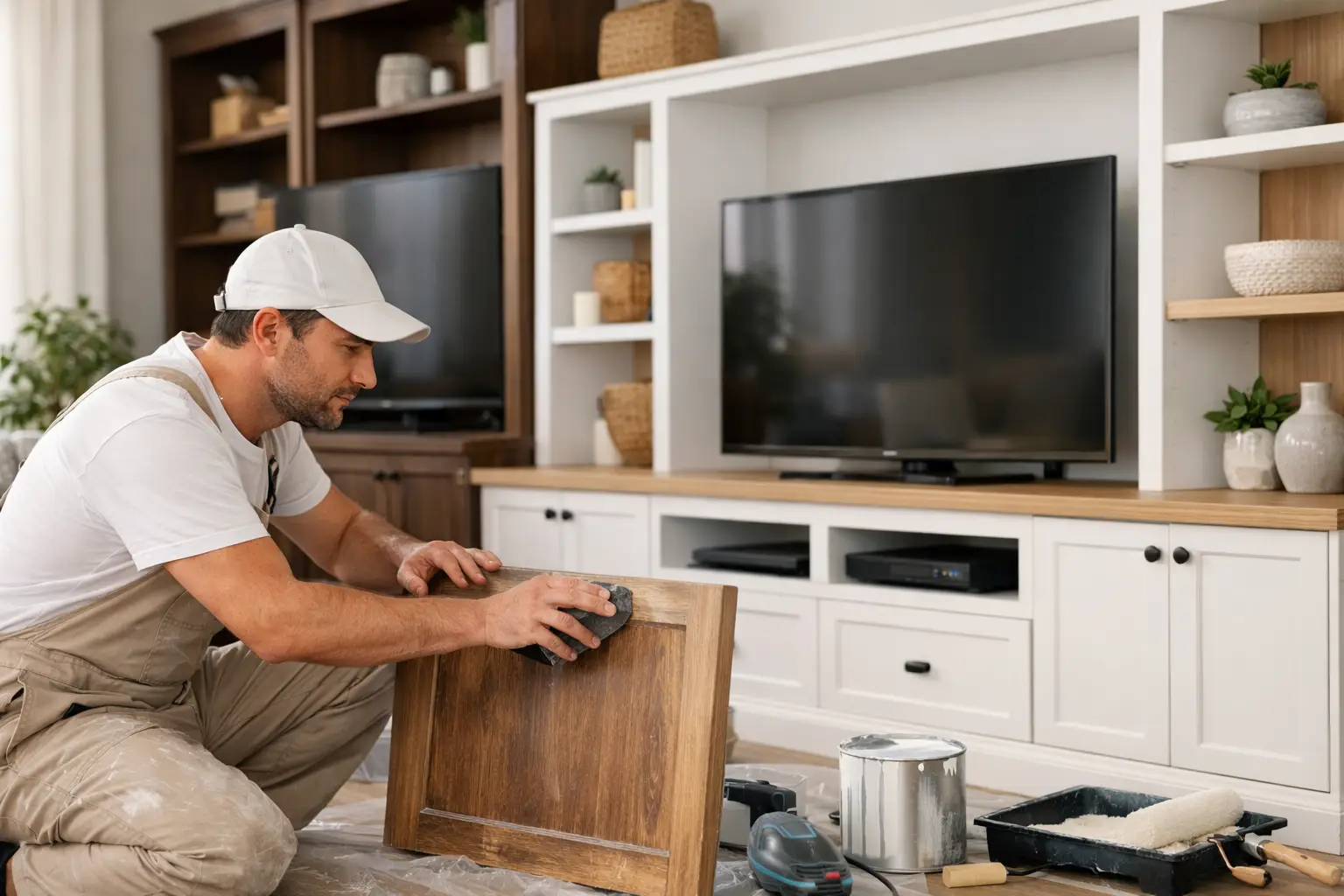
That oversized entertainment center may have good bones, even if its honey-oak finish, dated doors, and scratched shelves make the room feel stuck in another decade. When homeowners search for the best refinishing ideas for an entertainment center, they are usually looking for a visible upgrade without paying to replace a large, functional piece of furniture. The right finish can make it look built-in, more current, and better connected to the rest of your home.
Refinishing is especially worthwhile when the cabinet boxes are solid, the doors still align, and the piece provides storage you actually use. Paint creates the biggest style change, while stain can bring character back to real wood. The better choice depends on the material, the condition of the existing finish, and the look you want to create.
Start With What the Entertainment Center Is Made Of
Before choosing a color or finish, look closely at the construction. Solid wood and wood veneer are strong candidates for either staining or painting. Laminate and thermofoil surfaces can also be painted successfully, but they require more careful cleaning, scuff sanding, bonding primer, and durable topcoats. They generally cannot be stripped and restained like natural wood.
Check the furniture for loose veneer, chipped corners, damaged drawer slides, and sagging shelves. Repairs should happen before finishing begins. A beautiful new color will not hide a peeling edge or a door that hangs crookedly, and putting the preparation work first is what separates a temporary update from a finish that holds up.
Also consider how the piece functions now. Older entertainment centers were designed around bulky televisions and media equipment. If the center opening is too small for a modern screen, it may be better used for art, books, baskets, or a large statement mirror rather than forcing it to remain a TV cabinet.
Best Refinishing Ideas for an Entertainment Center
1. Paint It a Soft, Warm White
A warm white is one of the most dependable ways to make a large entertainment center feel lighter and less imposing. It works especially well in living rooms with beige, sand, cream, or warm gray walls, common choices in desert-area homes. Unlike a stark bright white, a warmer shade has enough softness to work with wood flooring and neutral upholstery.
This approach can make a dark or heavily detailed piece feel closer to custom cabinetry. To avoid a flat, builder-grade appearance, use a satin or low-sheen cabinet-grade finish. It is easier to clean than matte paint while still giving the unit a refined look.
2. Use Deep Navy, Charcoal, or Black for a Built-In Look
If the entertainment center has simple lines or substantial molding, a dark finish can make it look intentional and architectural. Navy adds color without overwhelming the room. Charcoal offers a softer alternative to black. Black works well when the room has light walls, warm wood floors, or brass lighting that needs contrast.
Dark colors do show dust and fingerprints more readily, particularly around handles and lower cabinets. A durable finish and thoughtful sheen level matter here. Satin is often the practical middle ground because it gives depth without highlighting every imperfection the way a high-gloss surface can.
3. Keep Natural Wood, but Update the Stain
Not every entertainment center needs paint. If yours is solid oak, maple, walnut, or another quality hardwood with attractive grain, refinishing it with a new stain may produce the most convincing result. A medium walnut, natural oak, or muted driftwood-inspired stain can reduce the orange or red cast of an older finish while keeping the warmth of real wood.
Stain is less forgiving than paint. The old finish must be removed evenly, and different wood species can absorb color differently. Veneer deserves particular care because aggressive sanding can cut through its thin wood layer. This option is best when the grain is worth preserving and the piece is in sound condition.
4. Create a Two-Tone Cabinet Finish
Two-tone refinishing adds dimension without making the room busy. Paint the main cabinet in a neutral white, greige, or soft gray, then use a darker shade on the base, interior backing, or lower doors. Another option is to retain a wood-toned top while painting the body below it.
This treatment works well on large entertainment centers because it breaks up their visual weight. It can also help the unit connect with other finishes in the room, such as a dark fireplace mantel, wood coffee table, or black window frames. Keep the palette limited to two finishes so the piece feels coordinated rather than pieced together.
5. Add Contrast to the Back Panels
The back wall of open shelving is an often-missed design opportunity. Painting it a shade darker than the exterior creates depth behind books, framed photos, ceramics, and greenery. For example, a cream cabinet with a muted olive or charcoal back panel can look polished without feeling overly decorative.
You can also use wallpaper on the back panels if the shelves are primarily for display. Choose a subtle pattern and install it only after the surfaces have been cleaned and smoothed. Wallpaper adds personality, but paint is usually the more flexible choice if you expect your style to change in a few years.
6. Replace Hardware and Simplify the Doors
New knobs and pulls are a small investment with a noticeable payoff. Matte black hardware creates contrast on light cabinets. Brushed brass brings warmth to navy, green, or charcoal finishes. Brushed nickel is a practical choice when your room already has cool-toned lighting or fixtures.
If the center has ornate handles, decorative appliques, or unnecessary trim, removing or simplifying some details can make it look newer. This is a case-by-case decision. Traditional molding may add value and character, while dated scrollwork can compete with a cleaner finish. Fill unused hardware holes carefully before priming so the repair disappears under the final coat.
7. Turn the TV Opening Into Display Storage
A large empty television cavity can make an older entertainment center look dated, especially if the TV is now wall-mounted elsewhere. Refinishing creates a chance to redefine that space. Add fixed shelves, install cabinet doors, or use the opening as a display niche for stacked books, artwork, and baskets.
For a more tailored appearance, paint the interior a darker accent color and add discreet lighting. The goal is not to fill every shelf. Leaving some open space gives the display room to breathe and keeps the center from feeling cluttered.
8. Use a Durable Cabinet-Quality Finish
The color gets attention, but preparation determines whether the result lasts. Entertainment centers are touched often, moved occasionally, and exposed to dust, heat from electronics, and cleaning products. Proper refinishing begins with degreasing, cleaning, repairing damage, and sanding or deglossing the surface so primer can bond correctly.
A quality bonding primer is essential for slick surfaces, stained wood, laminate, and previously painted cabinetry. Professional spray application can provide the smoothest, most even finish on doors and drawer fronts, while careful brush-and-roll work may be appropriate for some onsite areas. Either way, allowing adequate cure time before heavy use helps protect the finish from dents and sticking doors.
Choose a Finish That Fits the Room, Not Just a Trend
A dark entertainment center can be dramatic, but it may feel too heavy in a smaller room with limited natural light. A white or pale neutral can make the room feel open, but it may require more frequent cleaning in a high-traffic family space. Natural wood is timeless, yet it only works if the grain and substrate are worth showcasing.
Look at the nearby finishes before committing. Your entertainment center should relate to the flooring, wall color, fireplace surround, and other wood furniture, but it does not need to match every item exactly. A coordinated contrast usually looks more designed than trying to make every surface identical.
For homeowners in Palm Desert, Palm Springs, Rancho Mirage, and nearby Coachella Valley communities, refinishing a large media cabinet can be an effective way to update a living room without taking on the cost and disruption of replacement. Delta Custom Finishes approaches furniture and cabinetry finishes with the same priorities that matter in a kitchen or bath: careful prep, durable materials, and a color plan that makes the whole space feel more intentional.
Before buying paint, take a few photos of the center in its room at different times of day and test sample colors on a removable board. The best choice is the one that makes the piece feel like it belongs in your home now, while giving you storage and function you will still appreciate years from now.