
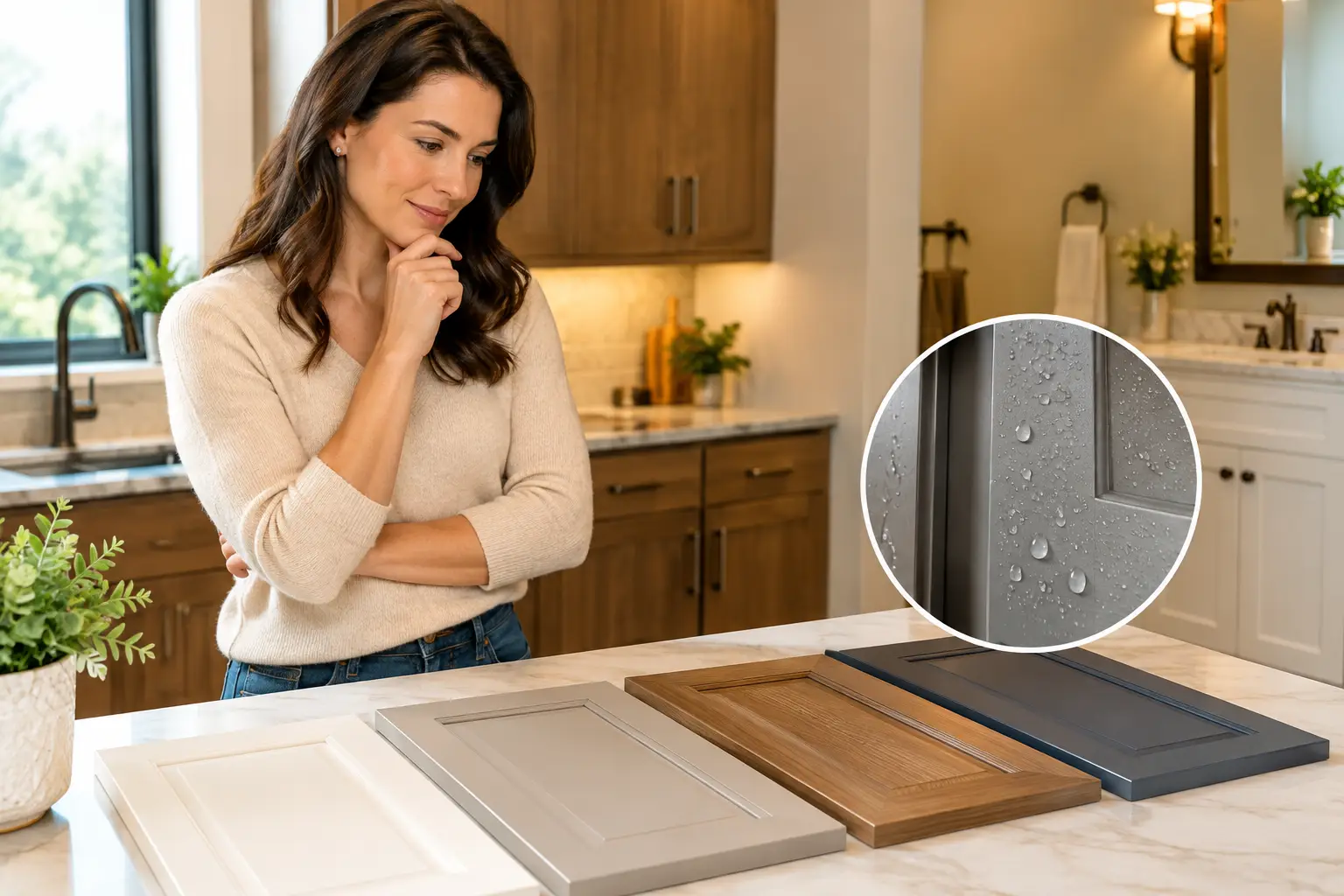
A bathroom vanity can look flawless on installation day and start showing trouble months later around the sink base, door edges, and drawer fronts. So, which cabinet finish resists moisture best? For most kitchens and bathrooms, a professionally applied catalyzed cabinet coating – often a conversion varnish or two-component polyurethane system – provides the strongest balance of water resistance, durability, and appearance.
The key word is system. Moisture protection is not just about the topcoat. It depends on careful cleaning and prep, repairing damaged areas, sealing exposed edges, using compatible primers and finishes, and allowing the coating to cure properly. That is why professional cabinet refinishing can make such a visible difference in high-use rooms without the cost of replacing cabinets.
Which Cabinet Finish Resists Moisture in Kitchens and Baths?
A catalyzed finish is usually the best choice for cabinets exposed to regular humidity, splashes, cooking steam, and routine cleaning. These coatings cure through a chemical reaction, creating a harder, more tightly bonded surface than many standard consumer-grade paints.
Conversion varnish has long been a strong cabinet-finish option because it wears well, cleans easily, and stands up to the demands of busy kitchens. Two-component polyurethane coatings are also excellent choices, particularly when homeowners want a painted cabinet look with strong moisture and stain resistance.
Neither finish makes a cabinet waterproof. Standing water, plumbing leaks, and constantly wet towels can eventually damage any finish and the wood or engineered material underneath it. But when applied correctly, these professional-grade coatings give cabinets far more protection than ordinary wall paint, a thin clear coat, or a rushed DIY touch-up.
For a kitchen, the benefit is resistance to steam, grease, and splashes near the sink and dishwasher. In a bathroom, it is protection from shower humidity, wet hands, and the repeated exposure that happens around vanity sinks. The finish helps preserve both the color and the cabinet surface, making the room easier to maintain over time.
Painted Cabinets Need the Right Coating, Not Just the Right Color
Many homeowners assume painted cabinets are less durable than stained cabinets. That is not necessarily true. A professionally painted cabinet can perform very well in a humid room when it is finished with the proper primer and catalyzed topcoat.
The paint color is mostly a design decision. The coating chemistry and preparation process are what determine how well that finish handles moisture. A quality cabinet coating should adhere tightly, resist chipping at high-contact points, and create a smooth surface that can be wiped clean without softening or discoloring.
This makes painted cabinets a practical choice for homeowners who want to brighten dark kitchens, update an outdated oak finish, or give a bathroom vanity a clean, modern color. White, soft greige, deep navy, charcoal, and warm green can all work beautifully, but every color needs the same level of protection underneath and on top.
Sheen matters, too. Satin and semi-gloss are popular for kitchens and bathrooms because they reflect enough light to feel clean and polished while remaining easier to wipe down than a flat finish. Higher sheen can show imperfections more readily, so surface repairs and spraying technique matter if a smooth, furniture-like result is the goal.
Stained and Clear-Coated Cabinets: Attractive, With Limits
A stained finish with a durable clear protective coating can also resist moisture well. This option is especially appealing when cabinet doors have attractive wood grain worth preserving. Rather than covering the wood, refinishing can refresh the stain color and add a protective topcoat that gives the cabinetry a richer, more current look.
For moisture performance, the clear coat is doing most of the work. A professional-grade catalyzed clear finish can protect stained cabinets effectively, but it still needs complete coverage at edges, joints, door profiles, and around hardware. These are the places where moisture often finds its way beneath a finish.
Stained cabinets may be a better fit for a homeowner who likes natural wood warmth and wants to reduce orange or yellow undertones without moving to paint. They are not automatically more moisture-resistant than painted cabinets. A properly applied painted finish and a properly applied stained-and-cleared finish can both perform well. The better choice depends on the cabinet material, current condition, preferred look, and how the room is used.
Why Cabinet Material Changes the Answer
Even the best coating cannot fully overcome damaged or moisture-sensitive cabinet material. Solid wood doors can expand and contract with humidity, especially if unfinished edges or cracks allow moisture into the wood. Plywood cabinet boxes generally hold up well, while particleboard and MDF can swell significantly if water reaches an exposed edge or seam.
This is why damage around a sink cabinet should be addressed before refinishing. Flaking laminate, swollen particleboard, loose veneer, water-stained toe kicks, and soft areas near plumbing are not issues to paint over. They need to be repaired, stabilized, or, in severe cases, replaced before a new finish is applied.
Door edges deserve special attention. They receive frequent contact from hands, absorb impacts, and are more vulnerable when the underlying material is MDF or particleboard. Proper sanding, priming, and edge sealing create a more durable foundation for the finish that homeowners see every day.
Preparation Is What Makes a Moisture-Resistant Finish Last
Cabinets collect years of oils, cooking residue, polish, hand lotion, and cleaning-product buildup. If that contamination remains on the surface, even a premium coating may fail to bond correctly. Peeling, chipping, and discoloration often begin because the surface was not properly prepared, not because the final paint color was wrong.
A professional refinishing process typically begins with thorough cleaning and degreasing, followed by sanding or surface treatment to create proper adhesion. Damaged areas are repaired, hardware holes can be filled or adjusted if the layout is changing, and a suitable primer is applied before the finish coats.
The final curing period matters just as much. Cabinet finishes can feel dry before they have reached their full hardness. Using doors too soon, scrubbing aggressively, or exposing a freshly finished vanity to constant steam can leave marks in a coating that would otherwise perform beautifully. A refinishing professional can provide realistic guidance on when cabinets can be carefully used and when they have fully cured.
Moisture-Resistant Does Not Mean Maintenance-Free
The best cabinet finish makes cleanup simpler, but it cannot protect against neglect or ongoing water exposure. Wipe standing water from vanity tops, cabinet fronts, and sink bases promptly. Use a soft cloth and a mild cleaner rather than abrasive pads, scouring powders, or harsh solvent-based products that can dull the sheen.
Watch for slow leaks under sinks and around dishwashers. A small plumbing problem can cause more damage than years of normal bathroom humidity. In bathrooms without strong ventilation, running the exhaust fan during showers and afterward helps limit the moisture load on cabinets, walls, and trim.
It is also smart to avoid hanging wet towels directly over cabinet doors or leaving damp bath mats pressed against a vanity base. These habits may seem minor, but repeated exposure at the same spot can weaken a finish over time.
The Best Finish Is One Matched to Your Cabinets and Budget
If your cabinets are structurally sound but look dated, refinishing offers a cost-conscious way to transform the room while adding real protection where it is needed most. A durable painted finish can create a dramatic new kitchen or bathroom. A refreshed stain and clear coat can preserve beautiful wood character while improving wear resistance.
The right recommendation depends on the cabinet material, existing finish, room conditions, design goals, and budget. Homeowners in Palm Desert and surrounding Coachella Valley communities often need finishes that handle active households, dry outdoor dust, air conditioning cycles, and bathroom humidity without sacrificing the look they want.
A careful evaluation before refinishing helps prevent surprises and directs the investment toward the repairs, preparation, and finish system that will make the biggest difference. With the right materials and craftsmanship, existing cabinets can look refreshed, feel more modern, and stand up better to the moisture that comes with everyday life.