
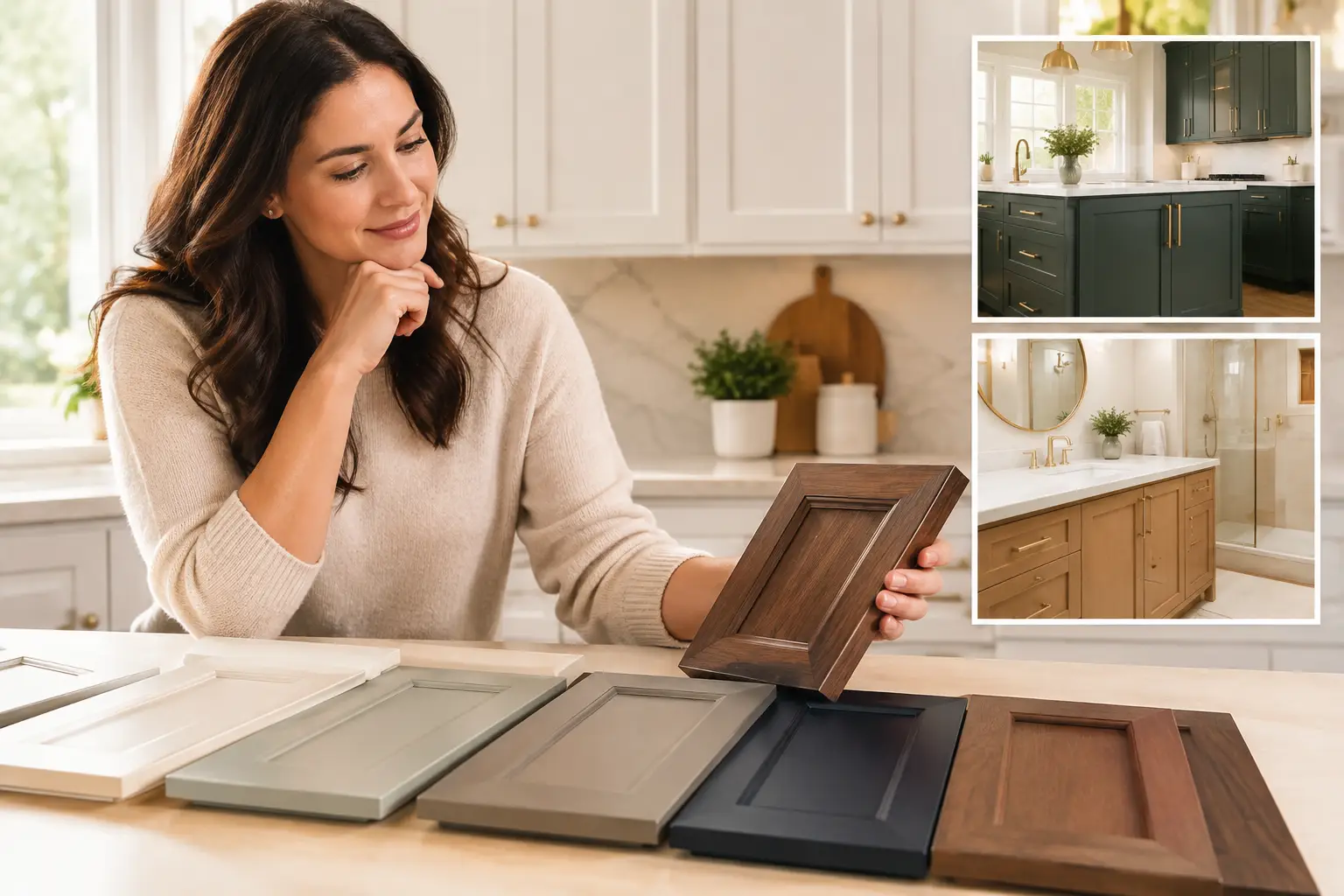
A cabinet color can look completely different once light hits it. The same warm white that feels crisp in a paint sample may look softer in a matte finish, brighter in satin, or more formal in semi-gloss. Knowing how to choose cabinet sheen helps you get the look you want while making sure your kitchen or bathroom cabinets can stand up to daily use.
Sheen refers to how much light a painted or refinished cabinet surface reflects. It affects color, texture, cleaning, and how noticeable everyday wear becomes. There is no single best sheen for every home. The right choice depends on the condition of your cabinets, the room’s lighting, your design preferences, and how hard the space works for your household.
What Cabinet Sheen Actually Changes
Cabinet sheen is often treated as a finishing detail, but it has a major impact on the final transformation. Lower-sheen finishes absorb more light and create a softer, more understated appearance. Higher-sheen finishes reflect more light, which can make cabinets look cleaner, brighter, and more defined.
That reflection comes with a trade-off. A glossier surface is generally easier to wipe clean, but it can also reveal dents, brush marks, uneven surfaces, fingerprints, and imperfections more readily. A flatter finish helps disguise minor flaws, yet it may be less forgiving when grease, water spots, or frequent cleaning are part of everyday life.
For refinished cabinets, sheen should never be selected separately from surface preparation. Repairs, sanding, cleaning, priming, and quality application all influence how smooth and durable the finished result will look.
The Most Common Cabinet Sheen Options
Most homeowners considering cabinet painting or refinishing will choose between matte, satin, semi-gloss, and gloss. Each creates a distinct look and performs differently in a kitchen or bathroom.
Matte and flat finishes
Matte finishes have little to no reflection. They create a calm, modern look that works especially well with contemporary, transitional, or relaxed organic designs. Dark colors, deep greens, charcoal, and soft neutrals can feel rich and sophisticated in a lower sheen.
The benefit is that matte disguises small surface irregularities better than shinier options. The drawback is maintenance. Cabinets are touched constantly, especially around pulls, knobs, trash pullouts, and lower drawers. In a busy kitchen or a bathroom used by children, a very flat sheen may show smudges or be harder to clean without affecting the finish.
Matte can be a smart choice for decorative built-ins, low-traffic cabinets, or homeowners who prioritize a soft, furniture-like appearance. For hardworking kitchen cabinets, it is usually worth discussing whether a washable low-luster cabinet coating can provide a similar look with better durability.
Satin finishes
Satin is often the most balanced cabinet sheen. It has a gentle glow rather than a strong shine, giving painted cabinets a polished appearance without looking overly reflective. It works with nearly every cabinet color, from bright white to navy blue, and suits a wide range of home styles.
For many kitchens and bathrooms, satin delivers the best middle ground. It is easier to clean than matte, less likely than semi-gloss to highlight minor cabinet imperfections, and reflective enough to add dimension in rooms with limited natural light.
Satin is particularly effective when homeowners want their cabinet transformation to feel fresh and current without making the finish itself the focal point. If you are unsure where to start, satin is often the safest and most versatile direction.
Semi-gloss finishes
Semi-gloss has a noticeable shine and a durable, easy-to-clean surface. It reflects more light than satin, which can help brighten a compact kitchen, dark bathroom, or room with limited windows. It also offers a more traditional painted-cabinet look that many homeowners recognize from classic white kitchens.
Its practical advantages make sense in high-use areas. Semi-gloss handles regular wiping well and is a strong option for homes with young children, pets, frequent cooking, or bathroom humidity. Grease splatters and toothpaste spots are easier to address when the finish has a smoother, more washable surface.
The consideration is surface condition. Semi-gloss can call attention to cabinet doors with visible grain, old repairs, dents, or uneven areas. Professional preparation helps reduce that concern, but homeowners should expect the sheen to make the cabinet profile more visible. That can be beautiful on clean, well-built doors and less appealing on heavily worn cabinetry.
High-gloss finishes
High-gloss cabinets create the strongest reflection and a sleek, dramatic appearance. They are most common in highly modern spaces, where smooth slab doors, simple hardware, and clean lines support the look. A high-gloss white, black, or bold color can make a major visual statement.
This is not usually the best default option for existing cabinetry. High gloss demands exceptionally smooth preparation and careful application because it exposes almost every flaw. It also shows fingerprints and smears quickly, even though it is easy to wipe down. For homeowners who want a practical, budget-conscious update rather than a high-maintenance statement finish, satin or semi-gloss often provides better value.
How to Choose Cabinet Sheen by Room
A kitchen and bathroom may have similar cabinets, but they create different demands. The kitchen typically deals with cooking oils, food splashes, frequent hand contact, and repeated cleaning. Bathrooms deal with moisture, humidity, soap residue, and limited ventilation.
For active kitchens, satin and semi-gloss are usually the strongest choices. Satin is ideal when you want an updated, softer visual finish, while semi-gloss makes sense when washability is the main priority. A household that cooks every day may prefer the added cleanability of semi-gloss. A kitchen used more lightly may benefit from satin’s more subtle look.
Bathrooms often benefit from satin or semi-gloss as well. In a small bathroom, the light reflection from either option can make the room feel brighter. If the vanity has lots of detailed trim or a textured wood surface, satin may keep those details from looking too busy. If the vanity is exposed to frequent splashes, semi-gloss offers a practical edge.
Consider Lighting Before You Make a Final Choice
Natural light, recessed lighting, pendant lights, and under-cabinet lighting all affect sheen. A high-sheen finish can look elegant in a softly lit showroom and much shinier under bright kitchen LEDs. Conversely, a satin finish in a dark room may look flatter than expected.
Look at paint samples on the actual cabinet surface whenever possible. Check them in the morning, afternoon, and evening, then turn on the lights you normally use. Pay attention not only to the color but also to reflections. Can you see ceiling lights sharply in the doors? Does the sheen emphasize grain or old door profiles? Does it make the room feel open or overly glossy?
Lighter cabinet colors naturally reflect more light, so white or pale beige cabinets in semi-gloss can appear quite bright. Darker colors can absorb light, making a satin finish feel refined and dimensional. The best sheen is often the one that supports the room’s existing light instead of fighting it.
Match the Sheen to Cabinet Condition and Style
Older cabinets can absolutely be transformed through refinishing, but their condition should guide the sheen decision. Doors with pronounced wood grain, previous paint buildup, chipped edges, or visible repairs may look better in satin than in semi-gloss. A lower reflection level is more forgiving while still looking professionally finished.
Cabinets with smoother doors and minimal damage can handle semi-gloss more easily. If your home has traditional raised-panel doors, semi-gloss can emphasize the architecture and create a classic finish. For shaker cabinets, satin offers a clean, current look that works with both modern and traditional hardware.
Your overall design matters too. Matte or satin complements warm wood floors, textured tile, natural stone, and softer wall colors. Semi-gloss works well when you want a crisp contrast with matte walls, simple backsplashes, and polished fixtures. The goal is not to make every surface shiny. It is to create enough variation that the room feels intentional.
Think About Cleaning Habits, Not Just Appearance
A finish that looks perfect on day one should also fit your real routine. Households with busy family schedules often need cabinets that can be cleaned quickly and regularly. Semi-gloss usually wins on easy wipe-down maintenance, while satin remains a practical option for most homes when a high-quality cabinet-grade coating is used.
Avoid choosing a very low sheen only because it is trending if your cabinets receive constant contact. Likewise, do not choose high gloss solely for durability if you know fingerprints will bother you. The best finish is one you will still appreciate after daily cooking, cleanup, guests, and normal wear.
Professional cabinet refinishing gives you the opportunity to make this choice with more confidence. Delta Custom Finishes can help homeowners compare sheen options against their cabinet condition, lighting, color goals, and budget before the final finish is applied.
A well-chosen sheen does more than protect your cabinets. It gives the room its visual rhythm: soft and relaxed, bright and classic, or clean and contemporary. Before committing, view real samples in your home and choose the finish that makes everyday living feel as good as the transformation looks.