
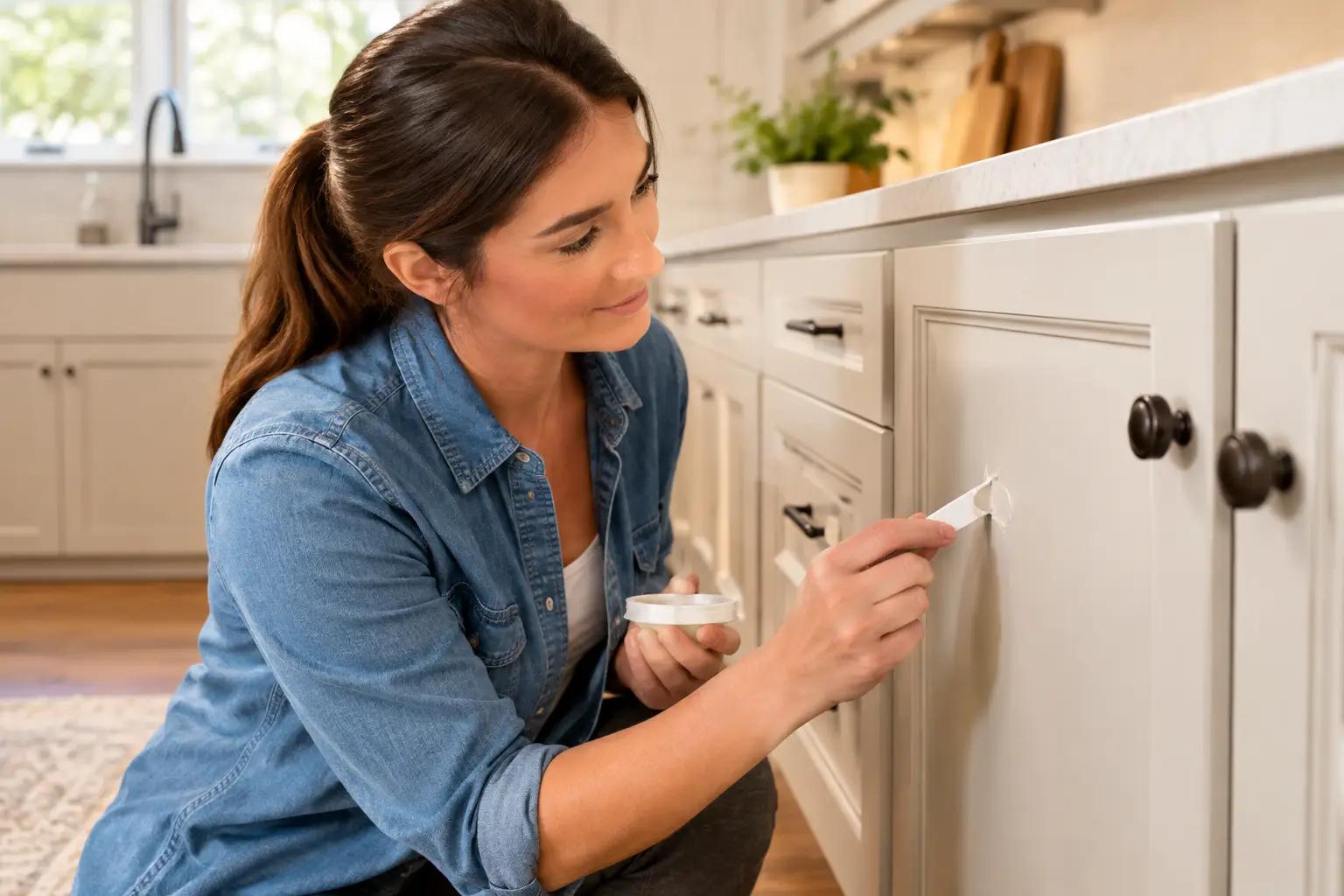
A single dent can make otherwise solid cabinets look tired, especially after a fresh countertop, new hardware, or updated wall color draws attention to every surface. Repairing dents in cabinet doors is often a practical alternative to replacing cabinet fronts, but the right repair depends on the door material, the depth of the damage, and the finish you want when the work is done.
For homeowners planning a cabinet painting or refinishing project, dent repair is not an optional detail. A new finish can make an unrepaired flaw more noticeable, not less. Taking care of damaged areas before paint or stain is applied creates the smooth, durable result that makes cabinets feel renewed rather than simply covered up.
Start by Identifying the Cabinet Door Material
Before choosing a repair method, determine what the door is made of. Solid wood, wood veneer, MDF, laminate, and thermofoil can all look similar from across the kitchen, yet they respond very differently to moisture, sanding, filler, and paint.
Solid wood is usually the most forgiving. Small dents in painted wood doors can often be filled, sanded, primed, and painted with excellent results. If the door will be stained instead of painted, however, the repair requires more care because ordinary fillers rarely absorb stain exactly like natural wood.
Wood veneer requires a lighter touch. The real-wood face is thin, so aggressive sanding can cut through it and expose the material underneath. MDF is smooth and stable but can swell if moisture reaches a chipped or dented edge. Laminate and thermofoil are less porous than wood, which means a filler may not bond well without careful cleaning and surface preparation.
When the material is uncertain, inspect the edges, hinge cups, and back of the door. A professional can also identify the substrate before recommending refinishing. That small step can prevent a repair that looks acceptable for a month but fails after daily use.
Assess Whether the Dent Is Cosmetic or Structural
Not every dent needs the same level of attention. A shallow dimple from a bumped chair or dropped pan is generally cosmetic. A dent that includes a crack, broken corner, peeling surface, loose veneer, or damage around a hinge may point to a larger problem.
Look closely at the surrounding area. If the surface feels firm and the finish is intact except for the indentation, a localized repair may be enough. If the cabinet door flexes, has a split along the grain, or has swollen near a sink or dishwasher, the repair may need reinforcement before any filling begins.
This is where replacement can occasionally make more sense. A severely water-damaged MDF door, a delaminating thermofoil door, or a cabinet front with extensive veneer loss may not offer a reliable long-term repair. But many dents that look discouraging at first can be repaired and refinished for far less than replacing an entire set of cabinets.
Repairing Dents in Cabinet Doors Before Painting
For painted cabinet doors, the goal is simple: create a clean, level, stable surface that disappears under primer and paint. The process matters more than the specific filler brand because cabinet doors get touched, opened, cleaned, and bumped every day.
Begin by removing the door when possible. Working on a flat, supported surface makes it easier to assess the dent and prevents filler or sanding dust from affecting surrounding cabinetry. Clean the area thoroughly to remove cooking residue, polish, and hand oils. In kitchens, residue is often the hidden reason paint and fillers fail to adhere properly.
For a shallow indentation in solid wood, a small amount of moisture and gentle heat can sometimes help raise compressed wood fibers. This method is best reserved for unfinished wood or areas where the existing coating will be completely removed. It is not a cure for chipped finishes, deep gouges, laminate, or MDF, and too much water can create additional damage.
Most painted-door dents are repaired with a high-quality wood filler or two-part repair filler. Press the material firmly into the dent, slightly overfilling it to allow for sanding. Once it has cured fully, sand it smooth with a fine grit. The repaired area should blend into the surrounding profile with no ridge at the edges.
Then prime the repair. Primer helps seal the filler and creates an even base so the repaired spot does not flash through the final coat as a dull or uneven patch. After a light final sanding, the door can be painted as part of the full refinishing process.
A good repair should be invisible at normal viewing distance and smooth to the touch. If you can feel the edge of the patch before painting, it will likely remain visible after paint dries.
Why spot painting often falls short
It is tempting to paint only the filled area, especially when the dent is small. The problem is that cabinet finishes age, fade, and collect wear differently over time. Even a color match can look different because of sheen, texture, and the way light reflects across the door.
Spot touch-ups can work for minor damage in a low-visibility area. For a more consistent result, especially on prominent kitchen doors, refinishing the full door or the entire cabinet set is often the better investment. This is particularly true with whites, dark colors, and satin or semi-gloss sheens, where differences are easy to notice.
Repairs for Stained Wood Cabinet Doors
Stained cabinets present a different challenge because the grain remains visible. A standard filler can level the dent but may leave a patch that does not match the color or grain pattern around it.
For a small compression dent in solid wood, carefully raising the fibers may preserve more of the original appearance than filling. Deeper damage may call for a color-matched filler, a wax repair product, or a more involved repair followed by toning and finish work. Results vary by species, stain color, and the age of the cabinets.
This is one area where professional refinishing often pays off. Matching a warm oak stain, a cherry-toned finish, or a dark espresso color requires more than picking a similar shade. The final appearance is influenced by wood grain, existing finish layers, sealers, and lighting. A repair can be technically sound but still stand out if the color work is not handled carefully.
If a homeowner is ready for a new cabinet color, painting over properly prepared wood doors can eliminate the challenge of matching a stain repair. It also opens up more design flexibility, from clean warm whites to soft greiges, deep greens, or tailored two-tone combinations.
Common Mistakes That Make Dent Repairs More Visible
The most common repair mistake is rushing the prep work. Filling a dent over grease, sanding too aggressively, or applying paint before the filler has cured can create problems that are harder to fix later.
Avoid these four shortcuts:
- Using lightweight wall spackle on cabinet doors. It is not designed for repeated impact, cleaning, or movement.
- Skipping primer over filler. Unprimed patches can absorb paint differently and show through the finish.
- Sanding veneer or profiled edges too hard. It is easy to remove the thin surface layer or soften the door’s crisp details.
- Ignoring the cause of the damage. A dent near a hinge, drawer pull, or appliance may return if alignment or clearance is not corrected.
Cabinet refinishing is a surface system, not just a coat of paint. Cleaning, repair, sanding, priming, and finish application all affect how the final cabinet doors look and how long they hold up.
When Professional Cabinet Repair Is Worth It
DIY repair can be a sensible option for a small dent on a painted, solid-wood door when you have the time and patience to test the repair. It becomes less appealing when damage is widespread, the cabinets have detailed profiles, or the desired finish is high-visibility and polished.
Professional help is especially valuable for dented doors with peeling coatings, water damage, cracked joints, veneer issues, or several previous touch-ups. A cabinet refinishing specialist can repair the surface while also addressing adhesion, color consistency, and finish durability across the room.
For homeowners in Palm Desert and nearby Coachella Valley communities, Delta Custom Finishes approaches cabinet repairs as part of the transformation, not as an afterthought. The goal is to make existing cabinets look intentional, current, and ready for everyday life without the cost and disruption of full replacement.
A dent does not have to define your kitchen or bathroom. With the right repair and finish plan, those cabinet doors can become the smooth, updated backdrop that makes the whole room feel more like home.