
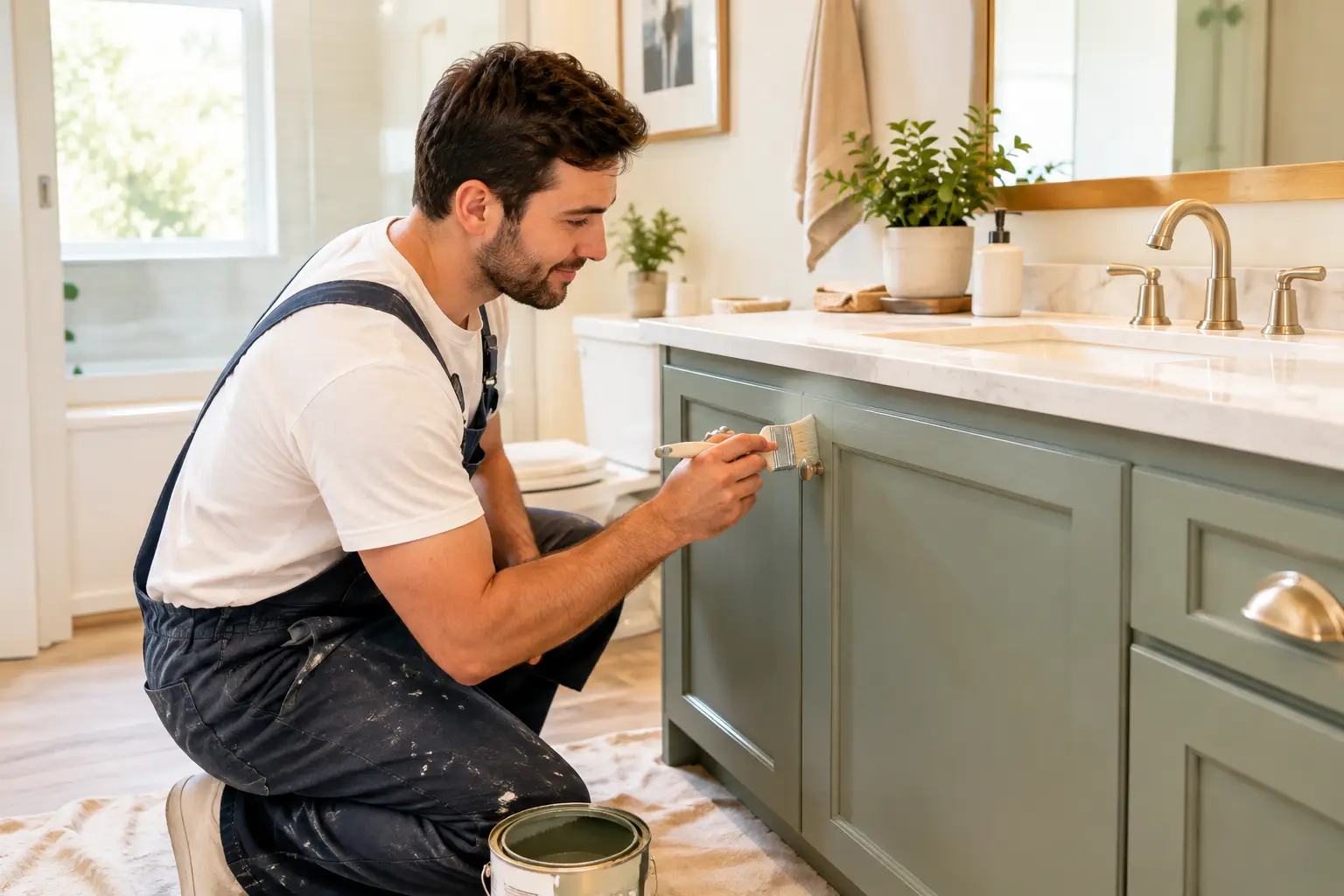
A bathroom vanity can make the entire room feel older than it is. Honey oak, worn espresso, chipped white paint, and dated hardware often draw attention before the tile, lighting, or countertop gets a chance to shine. Vanity painting gives homeowners a practical way to change that visual balance without paying for a full cabinet replacement.
For many bathrooms, the cabinet box is still structurally sound. The problem is the finish, not the vanity itself. A professional-quality repaint can turn a tired cabinet into a clean, custom-looking focal point while keeping more of the renovation budget available for details that matter, such as a new faucet, mirror, countertop, or lighting.
Why vanity painting makes financial sense
Replacing a bathroom vanity sounds simple until the project starts adding up. Beyond the cost of the new cabinet, homeowners may need to account for demolition, plumbing adjustments, countertop replacement, new sinks, backsplash repairs, flooring patches, and installation. A vanity that is a slightly different size can trigger several unexpected expenses.
Painting an existing vanity avoids much of that disruption. When the cabinet is in good condition, refinishing preserves the layout you already know works while giving the room a noticeably updated appearance. It is especially useful in bathrooms where the vanity is built into an alcove, connected to a countertop, or paired with tile that would be difficult to match after removal.
The savings are meaningful, but the decision should not be based on price alone. Painting is a strong option when cabinet doors and drawers operate properly, the box is stable, and water damage has not compromised the material. If the vanity is swollen from repeated leaks, falling apart at the joints, or poorly designed for your storage needs, replacement may be the better long-term investment.
What a professional vanity painting process should include
Bathroom cabinets deal with humidity, splashes, cosmetics, cleaners, and frequent hand contact. That is why a good finish begins long before the first coat of paint. Skipping preparation can lead to peeling around handles, rough texture, visible brush marks, and paint that fails when the room gets steamy.
Cleaning and surface preparation
Vanities collect more residue than many homeowners realize. Hair products, hand lotion, soap, makeup, and cleaning sprays can leave behind films that prevent coatings from bonding correctly. The surface needs a thorough cleaning before sanding or priming begins.
After cleaning, the existing finish is evaluated. Glossy coatings need to be properly deglossed or sanded so the new coating has a surface it can grip. Any peeling finish must be removed, and small dents, chips, nail holes, or worn corners should be repaired. This stage determines whether the final result looks like a quick paint job or a finished cabinet surface.
Repairs before color
Minor cabinet damage is often repairable. Loose hinges can be adjusted, drawer fronts can be aligned, and small gouges can be filled and smoothed. If an old handle placement leaves exposed holes, those holes can be repaired before new hardware is installed.
Water damage needs a more careful assessment. A few surface stains may be manageable, but soft particleboard, swollen seams, and deteriorating cabinet bottoms are warning signs. Paint can improve appearance, but it cannot restore material that has already lost its structural integrity.
Primer and durable finish coats
A quality bonding primer helps create a stable foundation, particularly over stained wood, laminate, or previously painted surfaces. It also helps block stain bleed-through that can discolor lighter paint colors over time.
The topcoat matters just as much. Bathroom vanity paint should be selected for durability and cleanability, not simply because it looks good on a color card. Professional application methods and cabinet-grade coatings help create an even finish that stands up better to daily use. The goal is a smooth surface that feels intentional, not a thick coating that hides every detail of the cabinet door.
Choosing the right color for a painted vanity
Color has a major effect on how large, bright, and current a bathroom feels. The right choice depends on the room’s natural light, wall color, countertop, flooring, and the look you want to create.
White and soft off-white vanities remain popular because they make compact bathrooms feel cleaner and more open. They also work well with many countertop materials and tile styles. The trade-off is that white can show makeup marks and scuffs more readily, especially in busy family bathrooms.
Greige, warm beige, mushroom, and soft taupe offer a calmer alternative for homeowners who want a light cabinet without a stark look. These colors pair well with warmer stone, brass hardware, and neutral tile. They can be more forgiving than bright white while still giving the bathroom a refreshed appearance.
For a stronger update, deep navy, charcoal, forest green, or black can make a vanity feel custom and substantial. Darker colors work particularly well when there is enough lighting and contrast around them. In a very small bathroom with limited light, however, a dark vanity may make the cabinet feel visually heavier. It depends on the surrounding finishes and whether the room needs brightness or definition.
Natural wood tones are also worth considering. If your vanity has quality wood construction and an attractive grain, refinishing with a new stain may be a better fit than opaque paint. A professional can help determine whether the existing wood species and condition will produce a consistent stained result.
Finish sheen matters in bathroom cabinets
Sheen is an easy detail to overlook, but it affects both durability and appearance. Flat paint is usually not a practical choice for a bathroom vanity because it is harder to clean and offers less moisture resistance. A higher-quality satin or semi-gloss cabinet finish is often a better fit.
Satin provides a soft, modern look with a modest amount of light reflection. It can work well on shaker doors and contemporary bathroom designs. Semi-gloss reflects more light and is generally easier to wipe down, making it useful in high-traffic bathrooms or homes with children. The right sheen comes down to the look you prefer and the level of daily wear the vanity receives.
Details that complete the transformation
Paint changes the largest visual surface, but a few targeted updates can make the result feel even more complete. New hardware can shift a vanity from traditional to modern, from basic to elevated, or from dated to clean and minimal. Matte black, brushed nickel, polished chrome, warm brass, and champagne bronze each create a different effect.
Before selecting new pulls or knobs, check the existing hole spacing. Choosing hardware that matches those measurements can avoid unnecessary drilling and patching. If you want to change the layout, plan that work before the final finish is applied.
The countertop, faucet, mirror, and light fixture should also guide the color choice. A vanity does not need to match every feature in the bathroom. In fact, contrast often produces the most polished result. A warm white cabinet beneath a dark countertop or a deep blue vanity paired with light walls can give the room clear visual structure.
When to hire a professional for vanity painting
A small vanity may seem like an easy weekend project, but bathrooms leave little room for finish mistakes. Drips, dust, brush marks, peeling edges, and uneven sheen are highly visible at close range. Proper ventilation, masking, surface repair, drying time, and material selection all affect the outcome.
Professional cabinet painters bring a process designed for cabinetry rather than walls. That distinction matters because cabinets are touched, cleaned, opened, closed, and exposed to moisture every day. The best results come from careful prep and coatings suited to the surface, not from applying standard wall paint over an existing finish.
For homeowners in Palm Desert, Palm Springs, Rancho Mirage, and nearby Coachella Valley communities, Delta Custom Finishes can help evaluate whether painting, refinishing, or replacement makes the most sense for your bathroom vanity. A clear plan for color, repairs, and finish level can keep the project aligned with both your design goals and your budget.
A well-painted vanity does more than cover an old color. It can give your bathroom a cleaner, more intentional look and help the space feel like it finally belongs with the rest of your home.