
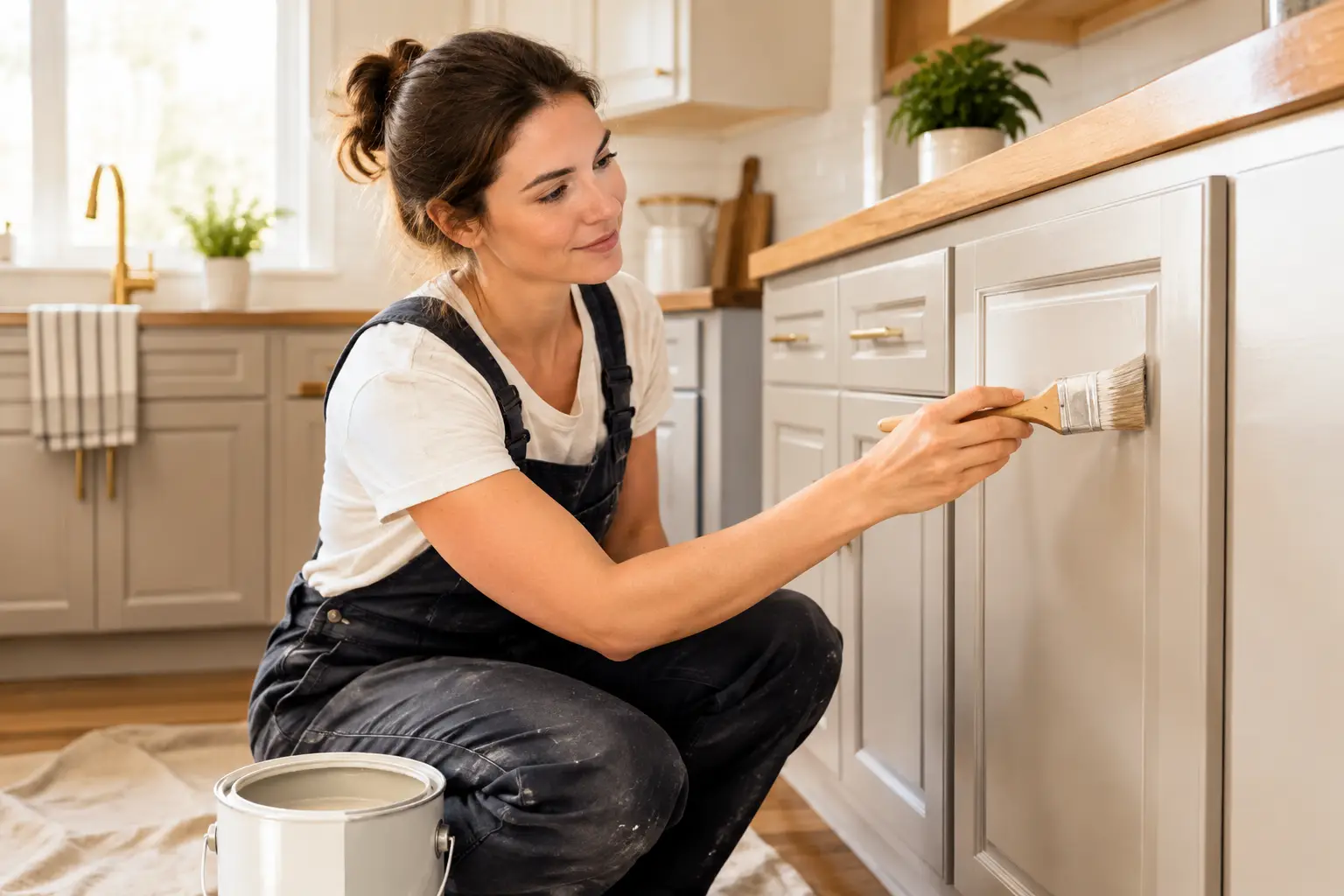
A dated laminate cabinet can make an otherwise well-kept kitchen feel stuck in another decade. The good news is that replacement is not the only answer. The best laminate cabinet refinishing options can deliver a dramatic color and style change while preserving cabinets that are still structurally sound – often for far less than a full cabinet renovation.
Laminate requires a different approach than wood. It has a smooth, nonporous surface, so paint and finishes will not hold properly without the right preparation, materials, and application process. When done professionally, refinishing can give laminate cabinets a clean, durable, custom-looking finish that changes the entire room.
Best Laminate Cabinet Refinishing Options for Your Home
The right option depends on the condition of your cabinet boxes and doors, the look you want, and how much daily use the space receives. For most homeowners, professionally painted laminate cabinets offer the strongest combination of affordability, durability, and design flexibility.
1. Professional cabinet painting
Painting is the most popular way to update laminate cabinets because it gives homeowners the broadest range of color choices. White and warm off-white cabinets remain popular for brightening darker kitchens, while soft greige, muted green, navy, charcoal, and black can create a more tailored look.
A professional laminate cabinet painting process is much more involved than applying paint over a cleaned surface. The cabinets must be degreased, scuff-sanded or mechanically abraded, repaired as needed, primed with an adhesion-focused primer, and coated with a durable cabinet-grade finish. Doors, drawer fronts, and frames each need careful attention so the final result looks consistent from every angle.
This option works especially well when cabinet doors are in good shape but the original oak-look, honey-colored, white laminate, or outdated faux-wood finish no longer fits the home. Paint can also help a kitchen coordinate with new countertops, flooring, backsplash tile, or hardware without forcing a full remodel.
2. Solid-color refinishing with a sprayed finish
For a smooth, furniture-like appearance, a sprayed finish is often the best choice. Brushing and rolling can work for small projects, but laminate cabinets tend to show application marks more easily because their flat surfaces reflect light. Professional spraying creates a more even finish with fewer visible texture issues.
A sprayed cabinet finish is not about making cabinets look glossy unless that is the goal. Homeowners can choose from flatter, satin, semi-gloss, and other sheen levels based on the style and practical needs of the room. Satin is a popular middle ground because it has a soft, clean look while still being easier to wipe down than a flat finish.
Higher sheen levels reflect more light and can make a kitchen feel brighter, but they also reveal surface imperfections more readily. If doors have minor dents, old hardware holes, or uneven areas, proper repairs and a sensible sheen selection make a noticeable difference.
3. Two-tone cabinet refinishing
Two-tone cabinetry is a smart way to add design interest without making a kitchen feel overdone. A common approach is using a lighter color on upper cabinets and a deeper color on lower cabinets or an island. This can ground the room while keeping it open and bright.
For smaller kitchens and bathrooms, white or light neutral uppers paired with a muted blue, warm gray, or green base can create dimension without closing in the space. In larger kitchens, deeper lower cabinets can make a strong visual statement, especially with warm metal hardware or light countertops.
Two-tone refinishing may cost more than a single-color project because it requires additional masking, planning, and color coordination. Still, it can provide the custom look homeowners want without the expense of replacing cabinet boxes and doors.
4. Laminate repair before refinishing
Not every laminate cabinet is ready for paint on day one. Peeling edges, chipped corners, swollen areas near sinks, loose laminate, and worn drawer fronts should be addressed before the finishing work begins. Skipping repairs may save time upfront, but flaws can remain visible or worsen under a new coating.
Minor chips and lifted edges can often be repaired and stabilized. Old handle holes can be filled when homeowners want to change hardware placement. Small dents and surface damage may be corrected through careful filling and sanding before priming.
Water damage requires a more honest evaluation. If cabinet boxes are swollen, crumbling, mold-damaged, or structurally weak, refinishing may not be the right investment for those components. A quality refinishing professional should tell you when repair makes sense and when replacement of a damaged door, drawer front, or cabinet section is the better long-term move.
5. Refacing as an alternative for heavily worn doors
Cabinet refacing is different from refinishing. Refinishing updates the existing surface with paint or another coating system. Refacing typically involves applying new materials to cabinet fronts and replacing doors and drawer fronts.
Refacing can be a good option when cabinet boxes are sound but the doors are badly damaged, the door style is beyond saving, or you want a major style change. It generally costs more than cabinet painting or refinishing, but less than full cabinet replacement.
For homeowners whose laminate doors are intact and simply dated, painting is usually the more budget-friendly choice. If you want a shaker-door style where flat laminate doors currently exist, refacing or door replacement may offer more value than trying to disguise the existing profile with paint alone.
What Makes Laminate Cabinet Paint Last?
The difference between a finish that chips quickly and one that performs well comes down to preparation. Laminate does not absorb coatings like wood, so adhesion must be built through the process.
First, cabinet surfaces need thorough cleaning to remove cooking oils, polish residue, hand oils, and everyday grime. Kitchens are especially demanding because grease can settle on doors that look clean at first glance. Next comes surface abrasion, which creates the texture needed for primer to grip. This step should be controlled carefully: the goal is to prepare the laminate, not sand through it or damage its edges.
An adhesion primer designed for slick surfaces is then applied, followed by a durable cabinet coating. Professional-grade products and proper cure time matter. Cabinets may feel dry relatively quickly, but a finish needs time to harden before it can withstand frequent opening, closing, wiping, and cleaning.
Hardware also affects longevity. New pulls and knobs can instantly modernize refinished cabinets, but they should be installed with accurate spacing and clean holes. Slamming doors, loose hinges, and misaligned drawers can damage even a well-applied finish over time, so adjustments are part of protecting the investment.
Choosing Colors That Work in Kitchens and Bathrooms
Color is where laminate refinishing becomes more than a repair project. It becomes a design decision. Light colors can make a compact kitchen or bathroom feel larger, while deeper shades can add contrast and personality to a room with plenty of natural light.
Before choosing a cabinet color, consider the fixed elements that are staying. Countertops, backsplash, wall paint, flooring, and appliances all influence whether a color feels balanced. A bright white may look crisp beside cool marble-look counters but harsh next to warm beige tile. A warm white or soft mushroom tone can be a better fit in homes with cream, tan, or earthy finishes.
In Palm Desert and nearby Coachella Valley homes, natural light is often abundant. That makes paint samples especially valuable, since a color can look much lighter or warmer during the afternoon than it does under indoor lighting. Test samples near the cabinets at different times of day before committing to a full project.
Is Refinishing Laminate Cabinets Worth It?
Refinishing is worth considering when your cabinet layout works, the boxes are solid, and the doors and drawer fronts are repairable. It can save money, reduce the disruption of demolition, and produce a major visible upgrade in a kitchen or bathroom.
It may not be the best choice if cabinets have widespread moisture damage, failing construction, severe laminate separation, or a layout that no longer serves your needs. Refinishing improves what is already there. It cannot solve poor storage, inadequate clearance, or cabinets that are structurally at the end of their life.
For many homeowners, though, existing laminate cabinets are better candidates than they first appear. With thoughtful repairs, professional surface preparation, and a finish chosen for the room, they can look clean, current, and intentionally designed. A cabinet refinishing consultation is a practical first step when you want the impact of a renovation without taking on the cost and disruption of replacing everything.