
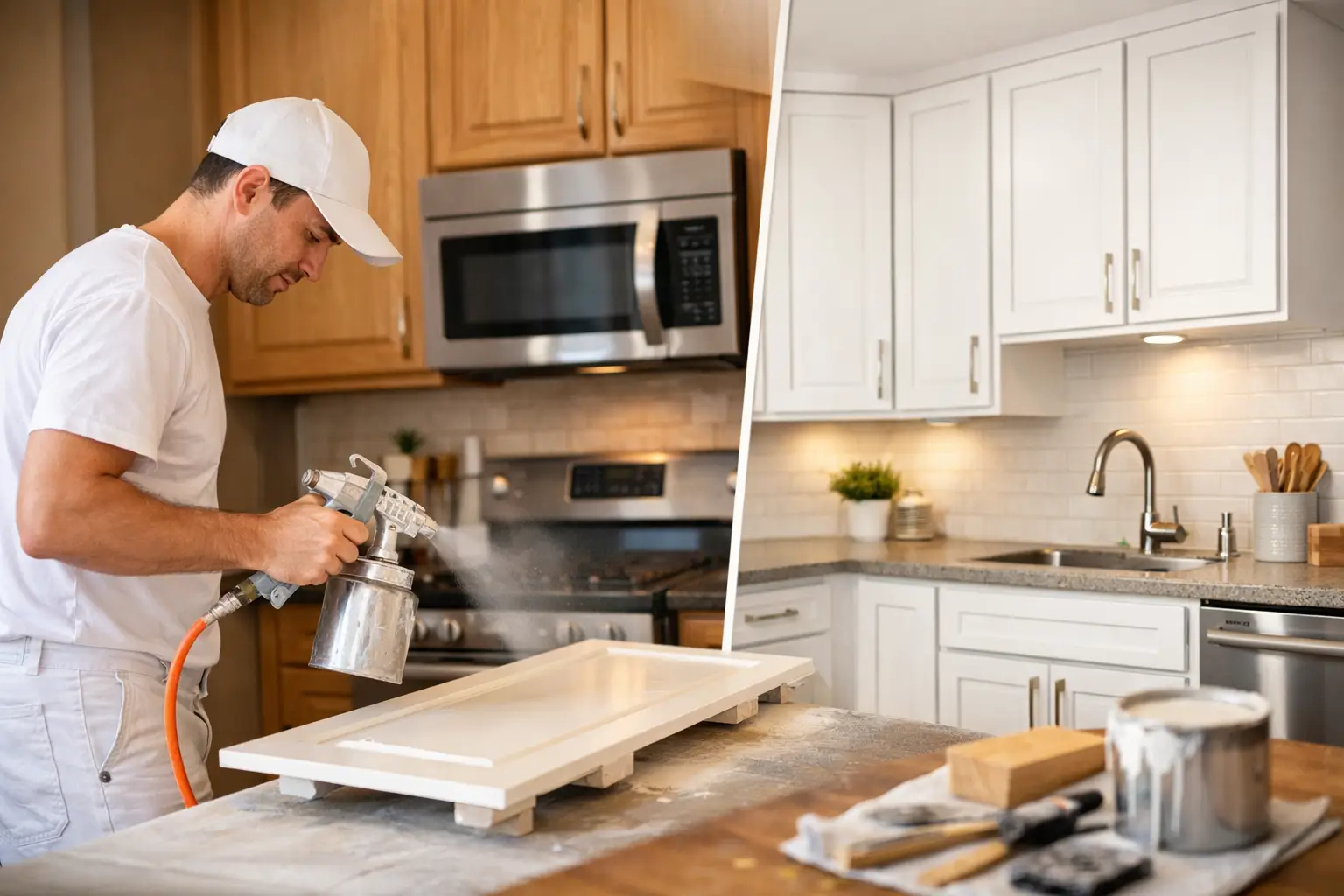
A small kitchen has nowhere to hide dated cabinets. Dark wood, chipped paint, yellowed finishes, and bulky-looking doors can make the entire room feel tighter than it is. Cabinet refinishing for small kitchens changes that visual weight without requiring the cost, mess, or layout disruption of a full cabinet replacement.
For homeowners who like their kitchen’s existing footprint but not its appearance, refinishing is often the practical middle ground. The right color, sheen, and preparation process can make the cabinetry look cleaner, lighter, and intentionally designed while preserving a budget for counters, lighting, appliances, or other improvements.
Why cabinet refinishing has a bigger impact in a small kitchen
Cabinets typically cover more visual space than anything else in a compact kitchen. They sit at eye level, frame the work area, and often extend from counter to ceiling. When their finish is worn or their color absorbs light, the kitchen can feel closed in even if the cabinets are structurally sound.
Refinishing addresses the surface that people notice first. A lighter painted finish can reflect available light and create a more open feel. A fresh stain can bring warmth and consistency back to real wood doors. Repairs to nicks, peeling edges, and damaged trim help the room feel cared for rather than patched together.
This is why cabinet refinishing delivers such strong design value in a small space. Replacing cabinets may be necessary when boxes are failing, water damage is extensive, or the layout simply does not work. But when the cabinetry is solid, removing it can add expense without providing a proportional visual benefit.
Start with what the kitchen needs to feel larger
The best finish is not always the brightest white or the trendiest color. It is the finish that works with the kitchen’s light, fixed materials, and daily use.
Light colors create breathing room
Soft white, warm white, light greige, pale taupe, and muted gray are dependable choices for many small kitchens. These colors reduce contrast between upper cabinets, walls, and ceilings, allowing the eye to move through the room more easily. They also pair well with a broad range of countertop and backsplash materials.
Pure white can look crisp and expansive, but it depends on the surrounding finishes. In a kitchen with cool gray counters or bright white tile, it may be a great fit. In a space with warm beige floors, cream backsplash tile, or golden lighting, a warmer white often looks more natural.
Dark finishes can work, with intention
A dark cabinet color is not automatically wrong in a small kitchen. Deep navy, charcoal, forest green, or black can create a polished, dramatic look, especially when the room has good natural light and lighter counters or walls. The trade-off is that dark finishes show dust, fingerprints, and wear more readily, particularly around handles and lower cabinet doors.
One balanced option is to paint only the lower cabinets in a richer color and keep upper cabinets light. This adds personality without making the upper half of the room feel heavy. Open shelving, glass-front doors, or a light backsplash can also help preserve visual openness.
Sheen affects both appearance and maintenance
The sheen of a cabinet finish matters as much as color. A low-sheen or satin finish is a popular choice because it offers a soft, refined look while still being practical to clean. Higher gloss reflects more light, but it can also reveal surface imperfections and fingerprints. Flat finishes tend to be less forgiving in a high-use kitchen because they are harder to wipe down cleanly.
A professional can help match the sheen to the condition of the doors and the level of daily activity in the home. That decision is especially valuable in a small kitchen, where every cabinet surface is close enough to be noticed.
Professional preparation is what makes the finish last
A new cabinet color can look excellent for a few months even when preparation is rushed. The difference shows up later, when paint chips near the pulls, doors stick, or old stains bleed through the finish. Refinishing is not simply applying a new coating over what is already there.
A proper process begins with assessing the cabinet material and existing finish. Solid wood, wood veneer, laminate, thermofoil, and previously painted cabinetry each need a different approach. Loose hinges, cracked trim, gouges, and worn edges should be repaired before finish work begins. Surfaces must then be thoroughly cleaned to remove cooking residue, oils, and polish buildup.
Depending on the cabinet condition and finish type, preparation may include deglossing, sanding, stripping, filling imperfections, priming, and careful masking. The finish is then applied in controlled coats for even coverage and durability. Doors and drawer fronts require special attention because their edges and frequently touched areas take the most wear.
This process takes more care than a weekend paint project, but it protects the investment. A smooth, durable cabinet finish helps a small kitchen look polished every day, not just on the day the work is completed.
Keep the design simple, not bland
Small kitchens benefit from visual consistency. That does not mean every element must be white or neutral. It means making a few clear choices that support each other rather than competing for attention.
If cabinets are being refinished in a light, classic color, hardware can provide contrast. Matte black pulls give a clean modern edge, while brushed nickel, aged brass, or champagne bronze can add warmth. Longer pulls often make narrow drawers and doors feel more tailored, though scale matters. Oversized hardware can overwhelm petite cabinet fronts.
A simple backsplash can also make refinished cabinets stand out. If the counters or floors have movement, a quiet backsplash keeps the kitchen from feeling busy. If the cabinetry is a solid neutral, a subtle patterned tile or warm texture may add character without crowding the room.
Lighting should be part of the plan as well. Under-cabinet lighting brightens the work surface and makes a small kitchen more inviting in the evening. Replacing a dated overhead fixture can reinforce the updated look without requiring a major renovation.
Know when refinishing is the right investment
Cabinet refinishing is an excellent choice when cabinet boxes are sturdy, doors are in reasonable condition, and the layout still meets the household’s needs. It is particularly useful for homeowners who want a noticeable transformation while keeping their project within a defined price range.
It may not be the best answer when there is severe water damage, delamination across multiple doors, major structural failure, or a kitchen layout that lacks enough storage or workspace. In those cases, refinishing can still improve the appearance temporarily, but it will not solve the underlying functional problem.
The good news is that many kitchens fall between these extremes. They may have dated oak, faded stain, old-fashioned paint colors, or visible wear, yet their cabinet construction remains sound. Those are often the best candidates for a professional finish update.
Plan for use, not just the reveal
A beautiful cabinet color should fit real life. Households with children, pets, frequent cooking, or rental property demands may prioritize cleanability and a forgiving midtone over a very dark or very bright finish. Homeowners preparing to sell may lean toward a broadly appealing neutral. Those updating a long-term home may choose a color that feels more personal.
Before choosing a finish, consider how natural and artificial light change throughout the day. View samples next to the countertop, backsplash, flooring, and wall color. A shade that looks perfect on a small swatch can read very differently across an entire bank of cabinets.
For Palm Desert, Palm Springs, and surrounding Coachella Valley homeowners, light is often abundant and intense. That can make a kitchen feel airy, but it can also alter how undertones appear. Testing colors in the actual room is worth the effort.
A small kitchen does not need a larger footprint to make a stronger impression. With thoughtful color selection, detailed prep, and a finish built for everyday use, the cabinets you already own can become the feature that makes the whole room feel new.