
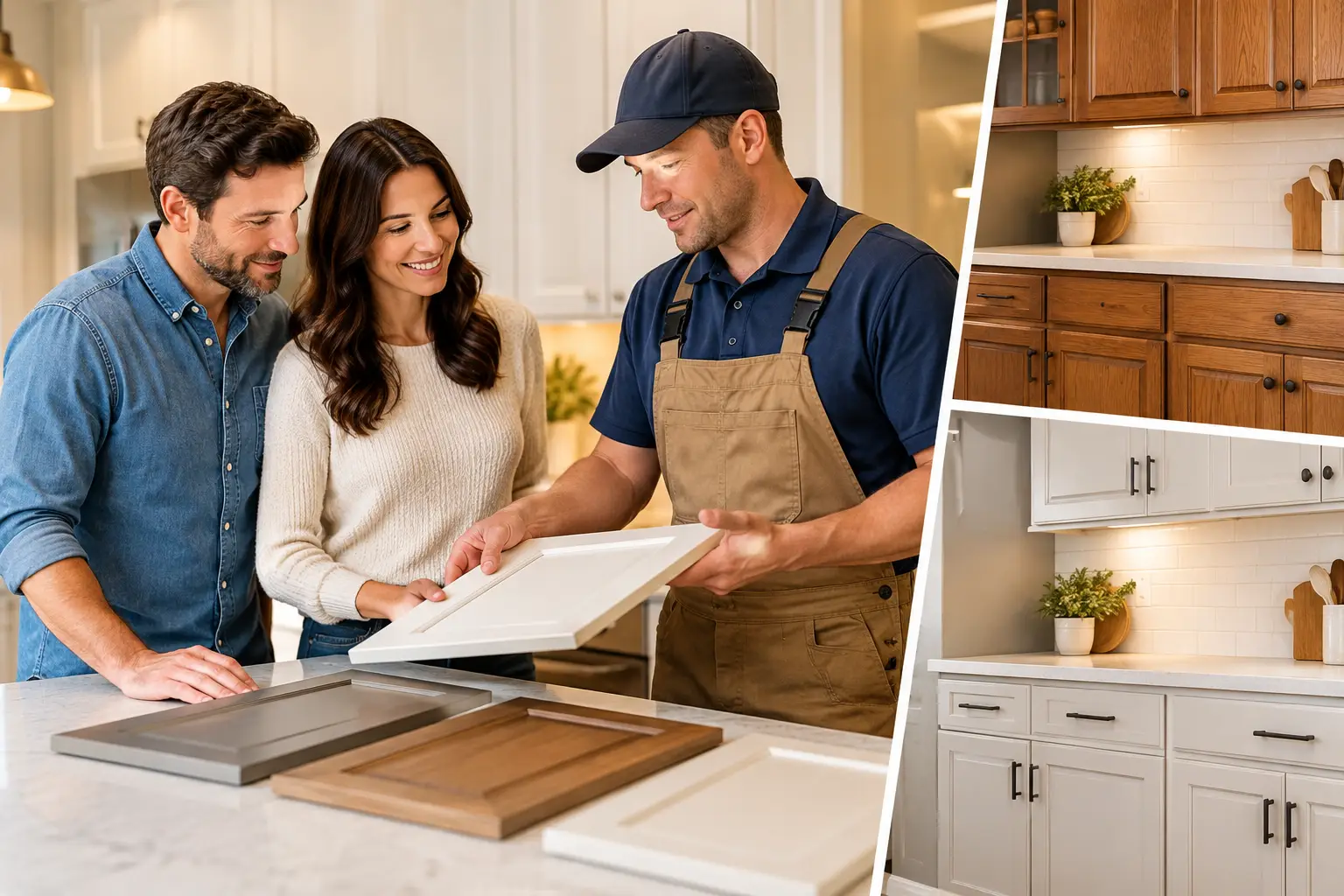
A kitchen can feel dated long before its cabinets stop working. If the layout is functional, storage meets your needs, and the cabinet boxes are still solid, cabinet refacing may offer a noticeable visual change without the disruption and expense of a complete replacement project. The right choice, though, depends on what is actually worn, damaged, or out of style.
For many homeowners, the bigger question is not simply how to get new-looking cabinets. It is how to invest in the home wisely. Refacing, refinishing, and replacement can all improve a kitchen or bathroom, but they solve different problems.
What Cabinet Refacing Actually Includes
Cabinet refacing keeps the existing cabinet boxes in place while changing the parts you see and touch. The visible exterior surfaces of the cabinet boxes are covered with a new veneer or laminate, and the old doors and drawer fronts are typically replaced with new ones. New hardware, trim, hinges, and moldings may also be added to complete the update.
This approach can change the style of a room dramatically. A kitchen with older raised-panel doors may receive cleaner shaker-style doors, for example. The cabinet layout remains the same, but the finished look can feel much more current.
Because the cabinet boxes stay in place, refacing usually creates less demolition than a full replacement. That can be especially appealing when countertops, flooring, and backsplash are still in good condition and you do not want to disturb them.
Still, refacing is not simply a cosmetic paint project. It involves fitting new components, matching surfaces carefully, and making sure the original cabinet structure is worth preserving. The quality of the existing boxes matters just as much as the look of the new doors.
When Cabinet Refacing Makes Sense
Refacing is often a strong option when cabinet boxes are sturdy, level, and free from serious water damage. It works well for homeowners who want a different door style or want a wood-look or laminate exterior that cannot be achieved through a simple finish update.
It can also be a practical middle ground when a complete remodel is not necessary. If you like where your cabinets are located, do not need more storage, and want to avoid moving plumbing or electrical connections, keeping the existing layout can protect your budget.
A refacing project may be worth considering when:
- The cabinet frames are structurally sound and securely attached.
- You want to replace dated door profiles rather than only change the color.
- Your current layout works well for cooking, storage, and daily use.
- Countertops and surrounding finishes can remain in place during the project.
The key is being honest about the condition of the cabinets. A fresh exterior will not fix sagging shelves, swollen particleboard, loose cabinet boxes, or damage caused by long-term leaks. Those issues may call for repair or replacement before any finish decision is made.
Refacing vs. Cabinet Refinishing
Cabinet refacing and cabinet refinishing are often grouped together, but they are not the same service. Refacing changes the exterior materials and commonly replaces doors and drawer fronts. Refinishing preserves the existing doors and cabinet surfaces, then improves them through repairs, detailed preparation, and a new paint or stain finish.
If you like your existing door style and the doors are in good shape, refinishing can often deliver the larger value. Professional cabinet painting can take orange-toned wood cabinets to a soft white, deep navy, warm gray, or another color that fits the rest of the home. Stain refinishing can refresh natural wood while changing its tone or reducing the appearance of wear.
The transformation can be substantial because color has such an immediate effect on a kitchen or bathroom. Dark, worn cabinets can make a room feel smaller and older. A carefully selected finish can brighten the space, connect the cabinetry to new counters or flooring, and make the entire room feel intentional.
Refinishing is also worth considering when you want to control costs without settling for a temporary-looking result. Proper surface preparation, repairs, sanding or finish removal when needed, and professional coating application make the difference between a finish that looks smooth and one that begins showing wear too quickly.
On the other hand, refinishing will not turn an ornate door into a shaker door or replace damaged door panels that have reached the end of their useful life. That is where refacing may offer a better fit.
When Replacement Is the Better Investment
There are times when keeping existing cabinets costs more in the long run. Full cabinet replacement may be the smarter path if the layout is inefficient, cabinet boxes are badly deteriorated, or storage needs have changed significantly.
For example, a kitchen with shallow drawers, limited pantry storage, awkward corner cabinets, or insufficient space for modern appliances may benefit from a redesigned layout. Replacing cabinets also gives you more freedom to change cabinet heights, add an island, improve accessibility, or rework the flow of the room.
Water damage deserves special attention in bathrooms and under kitchen sinks. If cabinet material is swollen, crumbling, or mold-affected, a surface update alone is not the answer. Structural concerns should be addressed first, even if that means replacing only the affected units rather than every cabinet in the room.
Replacement is the most flexible option, but it also tends to bring more expense, longer timelines, and additional decisions about countertops, flooring, plumbing, and installation. It makes sense when the function needs to change, not just the appearance.
What Determines the Cost of Cabinet Refacing
The price of cabinet refacing varies based on the size of the room, the number of doors and drawers, the door style selected, the veneer or surface material, hardware choices, and the amount of repair work required. A small bathroom vanity and a large kitchen with an island are very different projects.
Customization also affects the investment. Specialty door styles, decorative end panels, crown molding, soft-close hardware, and detailed trim can elevate the final appearance, but they add labor and materials. That does not mean they are poor choices. It means it is helpful to prioritize the upgrades that will have the most visible impact on your space.
If affordability is your main goal, compare refacing with professional refinishing rather than assuming new doors are always necessary. Keeping sound doors and changing the finish may free up budget for new hardware, lighting, a backsplash, or countertop updates.
Choosing a Finish That Will Still Feel Right Later
Whether you reface or refinish, the finish should work with the room rather than follow a trend blindly. Bright white cabinets can look clean and open, but warmer whites may work better with beige tile, cream countertops, or desert-inspired interiors. Dark colors can add contrast and sophistication, although they may show dust, fingerprints, and everyday wear more readily in high-use areas.
For wood cabinetry, a stain can preserve character while giving the room a more updated tone. This can be a good option for homeowners who appreciate natural grain but want to move away from a dated orange or red undertone.
It also helps to consider how much natural light the room receives. A color that looks perfect in a bright showroom can feel very different in a shaded kitchen or bathroom. Samples viewed in the actual room, at different times of day, lead to more confident decisions.
The Value of Professional Preparation
No cabinet update is better than the condition of the surface beneath it. In refacing, the cabinet boxes must be clean, stable, and properly prepared for the new veneer or covering. In refinishing, the existing coating must be evaluated, cleaned, repaired, and prepared so the new finish can bond correctly.
Professional workmanship is especially valuable around cabinet edges, corners, door profiles, and high-touch areas near handles and sinks. These are the places where shortcuts become visible first. A careful process protects the investment and creates a finish that looks consistent from across the room and up close.
For homeowners in Palm Desert and surrounding Coachella Valley communities, Delta Custom Finishes helps evaluate existing cabinetry and identify whether a professional painted or stained finish can deliver the transformation you want without a full replacement project.
The best cabinet update is not automatically the most expensive one. It is the one that improves the way your room looks and works while respecting the condition of your existing cabinets and the budget you set. Before choosing a direction, look closely at what you want to change: the color, the door style, the layout, or all three. That clarity makes the next step far easier.