
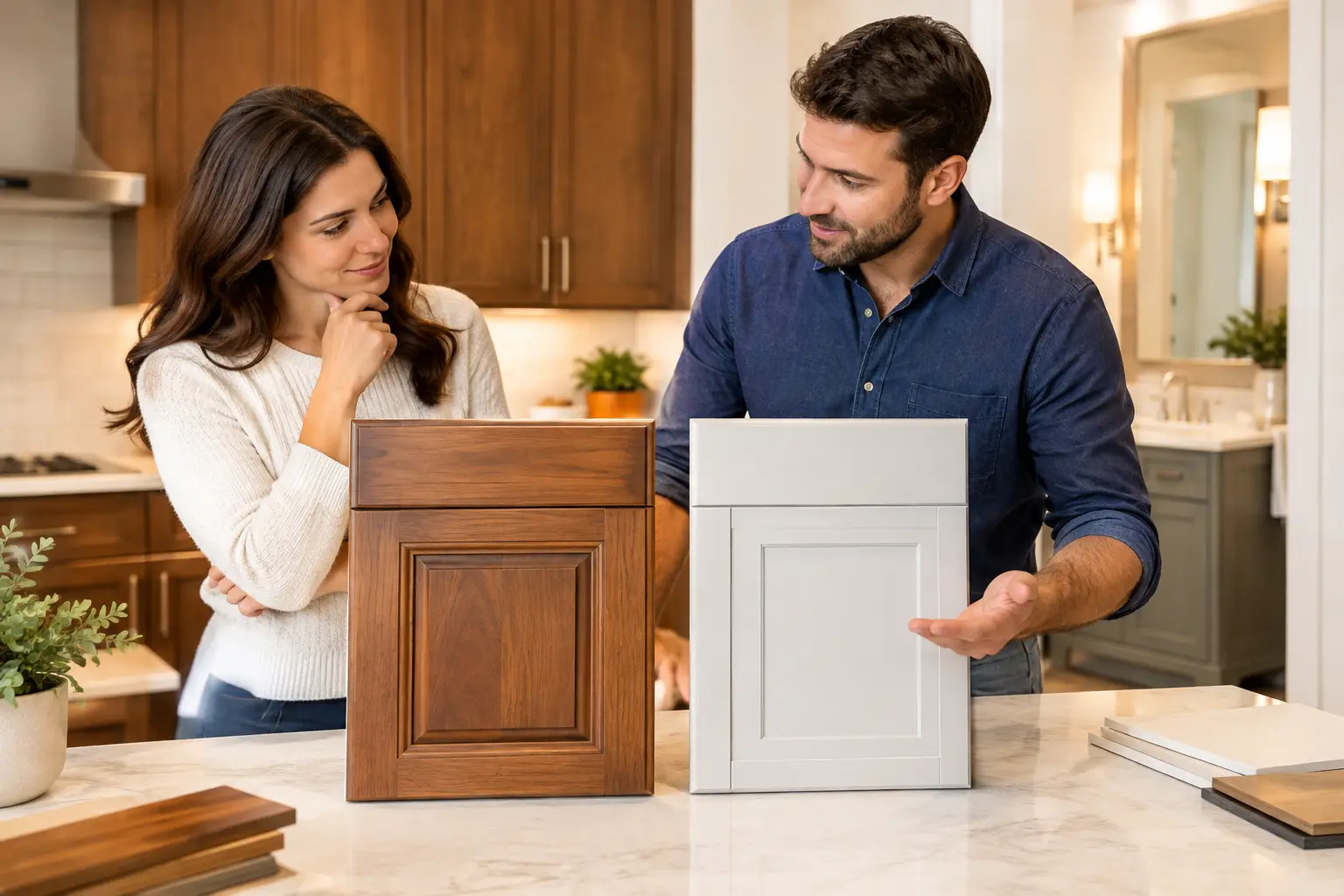
A cabinet door can look tired long before the cabinet itself is ready to be replaced. When homeowners compare solid wood versus laminate cabinets, the best choice is rarely just about appearance. It comes down to how the cabinets are built, how much wear they have taken, what finish you want, and whether you plan to paint, stain, repair, or replace them.
For a kitchen or bathroom update, understanding that difference can protect your budget. A professional refinishing project can give the right cabinets a major visual change without the expense and disruption of a full tear-out.
Solid Wood Versus Laminate Cabinets: The Core Difference
Solid wood cabinets have doors, drawer fronts, or face frames made from natural lumber such as oak, maple, birch, alder, or cherry. Wood has visible grain, natural variation, and the ability to be sanded, repaired, painted, or stained over time. Higher-quality wood cabinetry can last for decades when the structure is sound and the finish is maintained.
Laminate cabinets are made with a thin decorative surface bonded to a core material. That core may be particleboard, medium-density fiberboard (MDF), or plywood. The laminate layer can mimic wood grain, provide a solid color, or create a sleek contemporary look. It is not a paint finish and not a wood veneer, although homeowners often use those terms interchangeably.
The distinction matters because surface preparation and refinishing methods are different. Solid wood offers more flexibility when changing the finish. Laminate can also be painted successfully, but only when it is stable, properly cleaned, repaired, primed, and coated with products designed for adhesion.
Cost: Initial Price Versus Long-Term Value
Laminate cabinets are usually less expensive to purchase than solid wood cabinets. They are widely available, offer consistent color and pattern, and can be a practical choice for a budget-focused remodel. For a homeowner replacing cabinets from scratch, laminate may make sense when price and a modern uniform appearance are the top priorities.
Solid wood cabinets generally cost more because natural material, cabinet construction, and finishing require more labor. That higher initial price can be worthwhile when durability, repairability, and long-term refinishing potential matter. A well-built solid wood cabinet can change colors and styles several times during its life.
However, replacement cost is not the only number that matters. If your existing cabinets are structurally sound, refinishing them is often far more affordable than replacing them with either new laminate or new wood cabinetry. Keeping the cabinet boxes, doors, and layout in place can reduce material costs, demolition, installation time, and the inconvenience of a larger renovation.
Appearance and Design Flexibility
Wood has a warmth and variation that laminate is designed to imitate. If you love the character of grain, a stained wood finish may be the better fit. Solid wood can be refinished in lighter or darker stain tones, though the original species, grain pattern, and existing finish will affect the final result.
Painted cabinetry is where the gap between the two materials can become less obvious. A professionally prepared and sprayed finish can dramatically update both wood and laminate cabinets. White, warm gray, deep green, navy, black, and soft neutral colors can shift a dated kitchen or bathroom toward a more current look without changing the entire room.
Laminate has one advantage in pattern consistency. Unlike wood, which naturally varies from door to door, laminate gives you a more uniform surface. That can suit clean-lined contemporary interiors. The trade-off is that laminate cannot be stained like real wood, and a damaged printed pattern cannot be restored by sanding it down.
Durability in Kitchens and Bathrooms
Both materials can perform well, but moisture is the deciding factor more often than homeowners expect. Solid wood expands and contracts with changes in humidity. In a poorly ventilated bathroom or a kitchen with repeated water exposure, wood may show movement at joints, minor cracking in the finish, or warping if water damage is severe.
Laminate resists everyday surface moisture well as long as its edges and seams remain sealed. The weak point is the core beneath the laminate. When water gets under an edge, around a sink base, or through a damaged seam, particleboard or MDF can swell. Once that happens, the panel often cannot be returned to its original shape.
For homes in the Palm Desert area, dry conditions can also affect cabinetry. Wood can shrink slightly or reveal seasonal movement, especially around joints. That does not automatically mean the cabinets are failing. It means the finish and repair approach should account for the material and the conditions inside the home.
Repairs: What Can Actually Be Fixed?
Solid wood has a clear advantage when repairs are needed. Small dents, scratches, worn edges, loose joints, and minor surface damage can often be corrected before refinishing. Wood can be filled, sanded, leveled, and coated again. Even cabinet doors with an outdated orange oak stain can often be transformed with the right preparation and finish system.
Laminate repairs depend on the extent of damage. Small chips, scratches, or lifting edges may be repairable. A skilled refinishing process can address minor flaws before painting, but widespread peeling, deeply swollen panels, or crumbling particleboard may point to replacement of individual doors or damaged cabinet sections instead.
This is why an honest cabinet assessment matters before choosing paint or replacement. A new finish improves appearance, but it cannot make a water-damaged sink cabinet structurally sound. The goal should be a result that looks good and holds up, not a quick cosmetic fix that fails too soon.
Can You Refinish or Paint Each Type?
Refinishing Solid Wood Cabinets
Solid wood is the most adaptable material for refinishing. Depending on the desired result, the existing finish may be cleaned and prepped, removed, sanded, repaired, stained, or painted. Staining requires more attention to the wood species and existing color because dark stain, red undertones, and uneven grain can influence the final appearance.
Painting is often the most dramatic option for homeowners who want a fresh style without changing cabinet layout. Proper preparation is what separates a durable finish from one that chips around handles and door edges. Thorough cleaning, repairs, sanding, quality primer, and professional-grade coatings all play a role.
Painting Laminate Cabinets
Laminate cabinets can be painted, but they should not be treated like raw wood. The surface must be thoroughly degreased, lightly abraded to create grip, repaired where needed, and primed with an adhesion-focused product. Skipping those steps can lead to peeling, especially near frequently touched areas.
A successful laminate cabinet painting project is less forgiving of shortcuts. If doors are delaminating, the cabinet core is swollen, or the laminate is failing across large areas, painting may not be the right investment. If the laminate is intact and the doors are functioning well, a professional finish can be a cost-effective way to update the room.
How to Decide What Makes Sense for Your Home
Start with condition rather than material alone. Open the cabinets, check the hinge areas, inspect the sink base for swelling, look for peeling edges, and note whether drawers and doors still operate properly. Cabinet boxes that are stable and functional are often strong candidates for refinishing.
Next, think about the finish you want. Choose solid wood if you want the option to preserve or change a natural stain. Choose laminate if you prefer a consistent manufactured look and are buying new cabinets on a tighter budget. If you already own either type and want a painted update, the key question is whether the cabinet surfaces are sound enough to support a lasting finish.
Finally, consider the scale of the change. If you like your current layout but dislike the color, a refinishing project can deliver the most visible impact per dollar. New hardware, updated lighting, and a professionally applied cabinet finish can make an older kitchen or bathroom feel substantially newer without turning the project into a full renovation.
The right cabinet decision should leave room in your budget for the details that make the space feel finished. Before replacing cabinets that still have good structure, have their condition evaluated and explore what a professionally prepared paint or refinishing process can accomplish.