
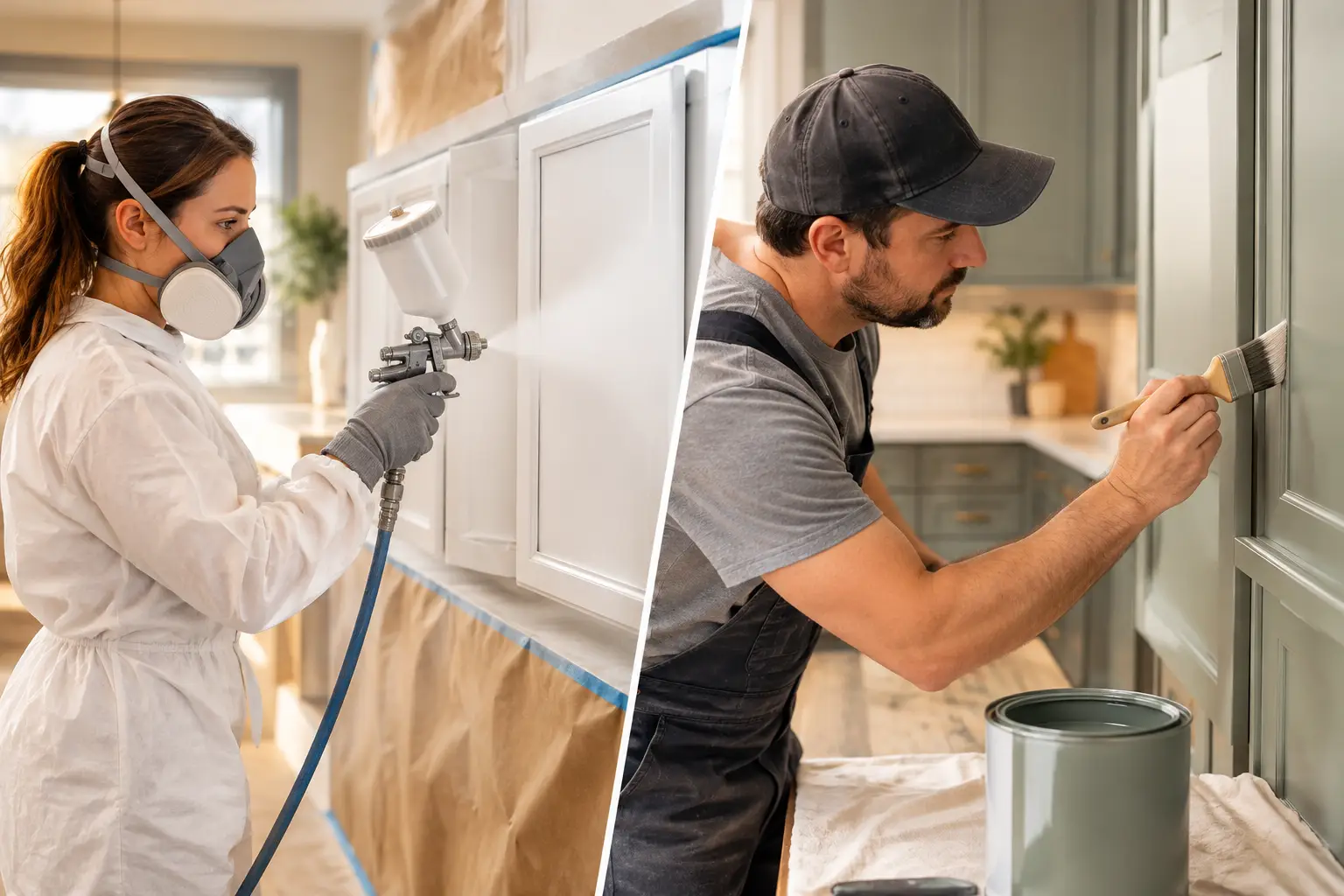
A cabinet color change can make a kitchen or bathroom feel completely new, but the application method has a major effect on the final result. When homeowners compare spray painting versus brush painting, the real question is not simply which one is faster. It is which approach will give their cabinets the smooth, durable, high-end appearance they want without stretching the renovation budget.
For most cabinet refinishing projects, spray application produces the more polished result. That does not mean brush painting has no place. It can be practical for touch-ups, small details, and certain budget-conscious projects. The best choice depends on the cabinet material, condition, desired finish, preparation requirements, and how long you expect the new look to last.
Spray Painting Versus Brush Painting: The Visible Difference
The biggest distinction is texture. A brush applies paint through direct contact with the surface, which can leave brush marks, ridges, and uneven coverage if the paint is not applied carefully. Even with a quality brush and self-leveling cabinet paint, the finish may retain some texture, especially on broad, flat cabinet doors.
Spray painting atomizes the coating into a fine mist, allowing it to settle evenly across the cabinet surface. With the right equipment, paint product, and technique, spraying creates a flatter, smoother finish that more closely resembles factory-finished cabinetry. This difference is especially noticeable on kitchen cabinets, where light reflects off doors and drawer fronts every day.
For homeowners choosing clean whites, soft greiges, deep navy, charcoal, or other modern solid colors, a sprayed finish often delivers the crisp look they have in mind. Dark colors and satin or semi-gloss sheens can make brush strokes more visible, so professional spray application becomes even more valuable.
Why Preparation Matters More Than the Tool
A paint sprayer cannot compensate for poor prep, and a brush cannot make up for a surface that was never cleaned or repaired correctly. Cabinet refinishing succeeds or fails long before the first coat of paint is applied.
Kitchen and bathroom cabinetry collects grease, cooking residue, hand oils, hairspray, moisture, and everyday wear. Those contaminants can prevent paint from bonding properly. Before refinishing, cabinets need thorough cleaning, sanding or deglossing, repair of chips and dents, and the right primer for the existing material and finish.
Doors and drawer fronts may also need to be removed and labeled so they can be finished evenly. Hardware holes may need filling if you are changing handle placement, while damaged edges or worn veneer require repair before paint goes on. A smooth sprayed coat will not hide scratches, open seams, or raised grain. In fact, it can make those flaws more obvious.
Professional cabinet painters build time into the process for preparation, curing, and quality checks. That work is a large part of what creates a finish that looks fresh on day one and continues to perform in a high-use home.
When Brush Painting Can Make Sense
Brush painting is not automatically the wrong choice. It is accessible, requires less setup, and can work well for limited projects. A homeowner painting a single bathroom vanity, a laundry-room cabinet, or a small built-in may find that brushing is a reasonable option, particularly when a lightly textured, hand-painted appearance is acceptable.
It is also useful for small repairs. A brush can carefully cover a nick around a cabinet edge or a minor area near hardware without setting up spray equipment. On detailed trim, a brush may help reach tight profiles, although professionals often combine brushing with spraying when necessary.
The trade-off is time and consistency. Brushed coats need to be thin and controlled to reduce drag marks and drips. They may require more sanding between coats, and it can be difficult to match the even appearance of doors painted at different times. Cabinet frames are also challenging because of corners, face frames, and hard-to-reach areas.
If your goal is a quick refresh at the lowest possible upfront cost, brush painting may be enough. If your goal is a lasting visual transformation that makes dated cabinets look professionally renewed, spraying usually offers a stronger return.
The Advantages of Spraying Cabinets
Spray painting requires more planning, but its advantages are substantial for cabinet work. It allows a finisher to apply thin, even coats across doors, drawer fronts, and cabinet boxes. Multiple thin coats generally build a more uniform finish than one heavy brushed coat.
Spraying is also efficient once the workspace has been properly protected. Cabinet doors can be finished on racks in a controlled area while the kitchen or bathroom is masked carefully to protect countertops, floors, appliances, walls, and surrounding fixtures. This organized process helps deliver consistent coverage across every component.
Durability is another reason professional spraying is often preferred. Cabinet-grade coatings need to withstand fingerprints, cleaning, moisture, and repeated opening and closing. When compatible primers and topcoats are applied at the correct thickness and allowed to cure properly, the result is better equipped for daily use.
That said, spraying is not a shortcut. Overspray, dust, poor ventilation, improper pressure, and incorrect paint thinning can create a disappointing finish. A professional setup and experienced technique matter just as much as the sprayer itself.
A Note on Cabinet Materials
Solid wood, MDF, veneer, laminate, and thermofoil cabinets do not all respond the same way to refinishing. Wood may show grain unless it is filled and sanded carefully. MDF edges need special attention because they can absorb coatings. Laminate requires the right bonding primer, while damaged or peeling thermofoil may need more extensive repair or may not be a good candidate for painting.
This is why an evaluation should come before choosing a color or application method. Some cabinets are excellent refinishing candidates. Others need repair work first, and a few may be better replaced if the underlying construction has failed.
Cost: Upfront Savings Versus Long-Term Value
Brush painting generally costs less to start because the tools are simple. A brush, roller, painter’s tape, drop cloths, cleaning supplies, primer, and paint can get a small project underway. But the apparent savings can shrink if the finish needs extra coats, repairs, or an earlier redo.
Spray painting can involve more labor, masking, equipment, and preparation. For that reason, a professionally sprayed cabinet refinishing project may cost more than a basic DIY brush job. Still, refinishing is typically far more affordable than full cabinet replacement, especially when the existing cabinet boxes are structurally sound.
The most useful way to assess value is to consider the finish you want to live with for years. Cabinets occupy a large amount of visual space in a kitchen or bathroom. A smooth, durable finish can change the character of the room, support a more current design style, and make the entire space feel better cared for without the expense and disruption of a complete remodel.
How to Choose the Right Method for Your Home
Choose brush painting when the project is small, the budget is very limited, and a little texture will not bother you. It can also be a practical solution for minor touch-ups after a professional project has fully cured.
Choose spray painting when cabinet doors have large flat surfaces, you want a smooth furniture-like finish, or you are updating a central kitchen or primary bathroom. It is the better fit for homeowners who want their cabinet transformation to look intentional, even, and professionally finished.
Color choice matters, too. White cabinets can look clean and bright with either method, but brush marks may show in angled light. Dark, saturated colors and higher sheens are less forgiving, making spraying the clear preference in many cases. If your cabinets have heavy wear, damage, or previous finish failures, prioritize surface repair and product selection before worrying about the application tool.
For homeowners in Palm Desert and surrounding Coachella Valley communities, cabinet refinishing can be a practical way to update a dated kitchen or bathroom while keeping a renovation budget under control. A thoughtful finish plan gives you room to choose a color, sheen, and level of detail that suits your home instead of settling for replacement costs you did not plan for.
The right cabinet finish should do more than cover old color. It should make the room feel cleaner, more current, and more like your own. Whether you need a simple vanity refresh or a complete kitchen transformation, start with the condition of your cabinets and the quality of finish you expect to see every time you walk into the room.